
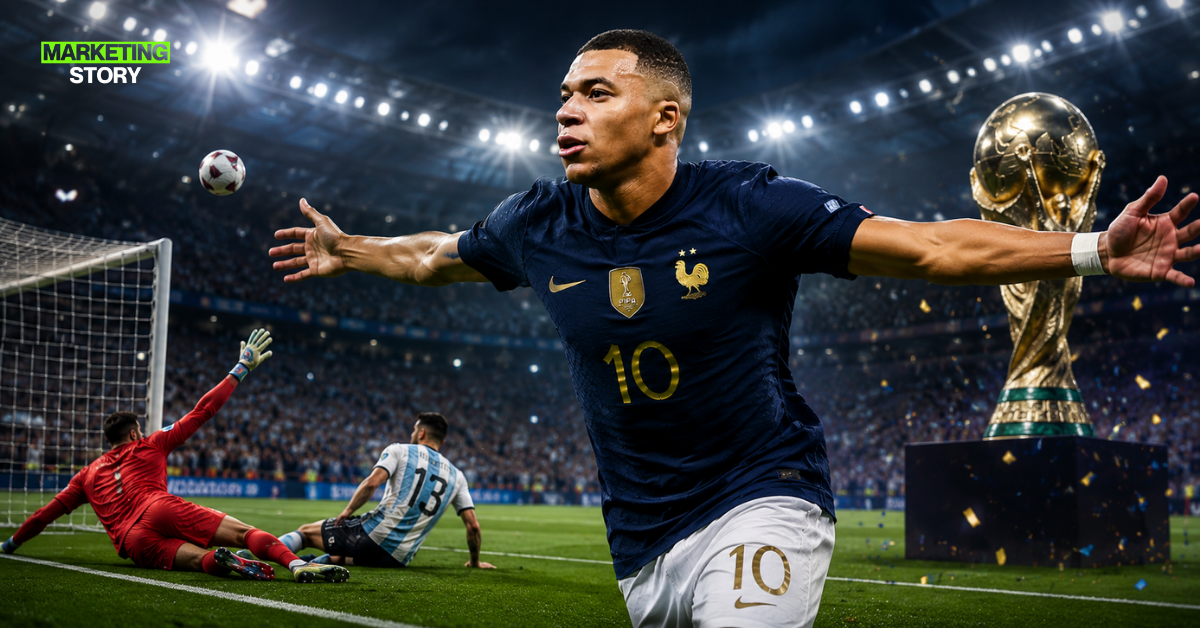
France booked their place in the FIFA World Cup 2026 Round of 32 after defeating Iraq 3-0 in a dramatic Group I encounter that became the longest World Cup match in history by elapsed time. A weather suspension lasting more than two hours turned a routine group-stage fixture into an extraordinary test of endurance for players, officials, and supporters alike.
The match at Lincoln Financial Field in Philadelphia stretched close to four hours after severe thunderstorms, lightning, and heavy rain forced FIFA officials to halt play during halftime. Despite the disruption, France resumed where they left off, with captain Kylian Mbappe scoring twice and Ousmane Dembele adding a third goal to secure qualification for the knockout stages.
Storm Turns Half-Time Into Two-Hour Delay
France entered halftime with a 1-0 lead after Mbappe opened the scoring before the break. However, what should have been a standard 15-minute interval transformed into a 131-minute suspension as thunderstorms swept across Philadelphia.
Under United States weather safety protocols, matches must be suspended whenever lightning is detected within eight miles of a stadium. The game can only restart after a continuous 30-minute period without lightning activity. Repeated strikes in the area continually reset the countdown, forcing officials to postpone the restart multiple times.
Supporters were instructed to evacuate exposed seating areas while players remained inside dressing rooms awaiting clearance.
Play eventually resumed at 8:00 pm local time, more than two hours after halftime began, making the fixture the longest World Cup match ever in terms of total elapsed time.
France Dominate Despite Disruption
The lengthy interruption failed to derail France’s momentum.
Before the storm, Didier Deschamps’ side had dominated possession and controlled the tempo. Mbappe opened the scoring with a powerful strike from outside the penalty area, beating Iraq goalkeeper Ahmed Basil.
Iraq’s challenge became even tougher when star striker Aymen Hussein was forced off with an injury midway through the first half.
After play resumed, France immediately regained control. Ousmane Dembele capitalized on a defensive mistake and provided an assist for Mbappe’s second goal. The French captain calmly finished to double his side’s advantage.
Dembele then got on the scoresheet himself, scoring his first World Cup goal to complete a comfortable 3-0 victory.
Mbappe nearly completed a hat-trick late in the match but missed a clear opportunity before being substituted.
Mbappe Reaches Historic Milestone
The brace carried significant historical importance.
Mbappe moved to 16 career World Cup goals, drawing level with Germany legend Miroslav Klose and surpassing Brazilian icon Ronaldo, who scored 15 goals during his World Cup career.
The achievement came on Mbappe’s 100th international appearance for France, adding another milestone to an already remarkable career.
Only Lionel Messi now stands ahead with 18 World Cup goals after scoring twice for Argentina earlier in the tournament.
France coach Didier Deschamps praised his captain’s achievement and backed him to continue rewriting football history.
“Records are made to be beaten,” Deschamps said after the match. “He will keep scoring goals and has the ability to push the record even higher.”
A Warning For FIFA World Cup 2026
While France celebrated qualification, the match highlighted a growing concern surrounding the expanded World Cup in North America.
With games being played across the United States, Canada, and Mexico during summer months, weather-related disruptions are expected to remain a major challenge. Thunderstorms, extreme heat, and changing climate conditions could significantly affect player performance, recovery schedules, and tournament logistics.
Sports science experts have repeatedly warned that extended interruptions can increase injury risks because players must cool down and then rewarm their bodies before returning to high-intensity competition.
For France, the delay proved only a temporary inconvenience. For FIFA, however, the extraordinary night in Philadelphia may serve as an early reminder that weather could become one of the most unpredictable opponents of the 2026 World Cup.