
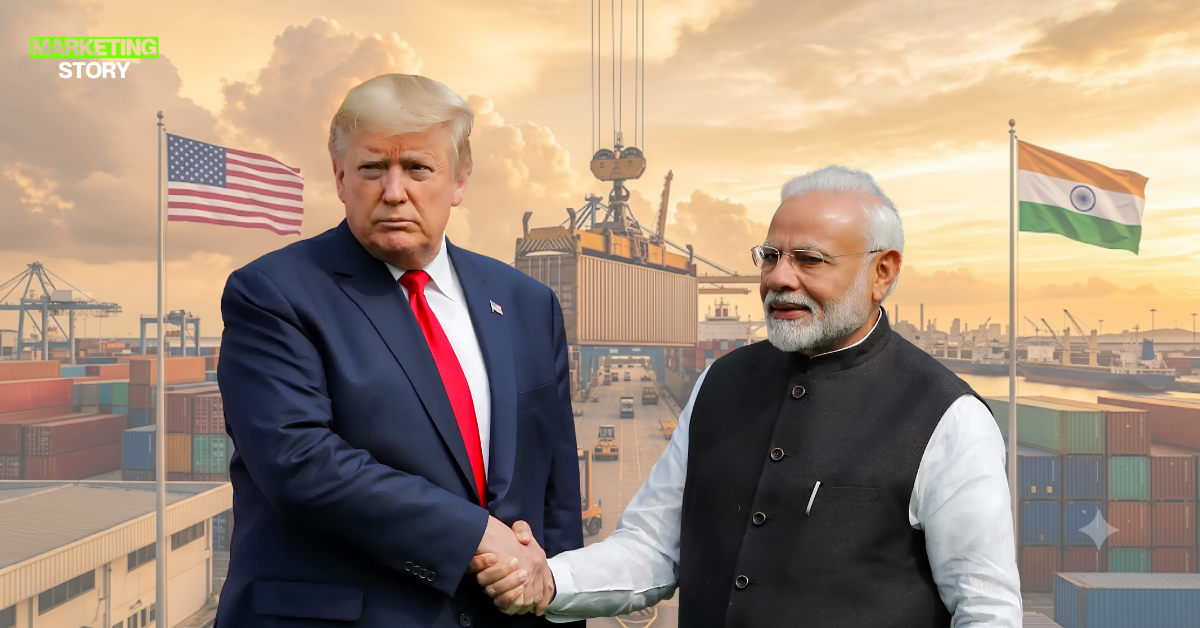
Why Has the US Imposed New Tariffs on Imports from India?
The United States has imposed a 10% tariff on goods imported from India as part of a broader trade action targeting products linked to forced labour practices. The move, announced by the Trump administration, affects India and 16 other countries that have taken steps to prohibit imports made using forced labour but are still expected to strengthen enforcement.
The tariffs were imposed under Section 301 of the US Trade Act of 1974, following investigations into forced labour practices across 60 economies. While India was initially proposed to face a 12.5% tariff, the rate was reduced to 10% after New Delhi amended its foreign trade policy to ban the import of goods produced using forced labour.
The latest tariffs came into effect at 12:01 a.m. Friday, replacing a temporary import tax that had been in place since February.
India Receives Lower Tariff After Policy Amendment
In June, the US Trade Representative (USTR) proposed a 12.5% tariff on Indian goods under the Section 301 investigation.
However, on July 14, the Indian government amended its Foreign Trade Policy to prohibit the import of goods produced using forced labour. The policy change was introduced amid the ongoing US investigation covering 60 countries, including India.
Acknowledging India’s action, US President Donald Trump said the revised tariff rate was intended to encourage stronger enforcement of the new prohibition.
“The Trade Representative has advised me that the goods of these economies should be tariffed at the 10% rate to further encourage these economies to effectively enforce such prohibitions,” Trump said in an official memorandum.
17 Countries Face 10% Tariff, Others to Pay 12.5%
According to the US Trade Representative (USTR), the new tariffs apply to 60 economies.
Among them, 17 countries, including:
- India
- Canada
- United Kingdom
- Bangladesh
- Pakistan
will face a 10% tariff.
The remaining 43 countries, including China, Japan, and several others that do not have laws prohibiting imports made using forced labour, will face 12.5% tariffs.
The tariffs are aimed at encouraging governments to adopt and enforce stronger restrictions against forced labour in global supply chains.
Certain Products Exempted
The US has clarified that the forced labour tariffs will not apply to certain categories of imports.
Exemptions include:
- Raw materials that are essential for domestic supply.
- Products whose absence could disrupt the US economy.
- Goods that cannot be produced or grown in sufficient quantities within the United States.
These exemptions are intended to avoid supply shortages while continuing to pressure countries to strengthen labour standards.
Tariffs Follow Supreme Court Ruling
The latest action comes after the US Supreme Court struck down the Trump administration’s earlier reciprocal tariffs introduced in 2025, ruling that emergency powers could not be used to impose them.
Following that decision, the administration introduced a temporary 10% import tariff on all countries for 150 days, beginning on February 24.
That temporary measure expired on Friday, paving the way for the new country-specific tariffs announced under Section 301.
US Trade Representative Jamieson Greer said the new tariffs aim to address both human rights concerns and distortive trade practices, while improving labour standards globally.
India Seeks Resolution Through Trade Talks
India has challenged both Section 301 investigations initiated by the USTR and maintains that issues related to labour standards and trade should be addressed through the ongoing India-US bilateral trade agreement negotiations.
Trade experts believe the reduction in India’s tariff rate from 12.5% to 10% sends a positive signal despite the new levy.
According to Abhik Sengupta, a programme officer with an industry body, the decision suggests Washington is willing to balance enforcement with its broader strategic partnership with India.
The United States remains India’s second-largest trading partner and its largest export destination. Bilateral goods trade reached nearly $141 billion in 2025, with India’s exports valued at $87.3 billion, according to official commerce data.
What’s Next?
The latest tariff decision highlights the growing intersection of trade policy and labour standards in global commerce. While India secured a lower tariff by amending its foreign trade policy, the US has made it clear that effective enforcement will remain a key expectation.
Meanwhile, reports suggest the Trump administration is preparing another round of tariffs targeting countries that subsidise excess manufacturing capacity. As India and the US continue negotiating a bilateral trade agreement, future discussions are expected to focus on balancing market access, labour compliance, and long-term economic cooperation.