
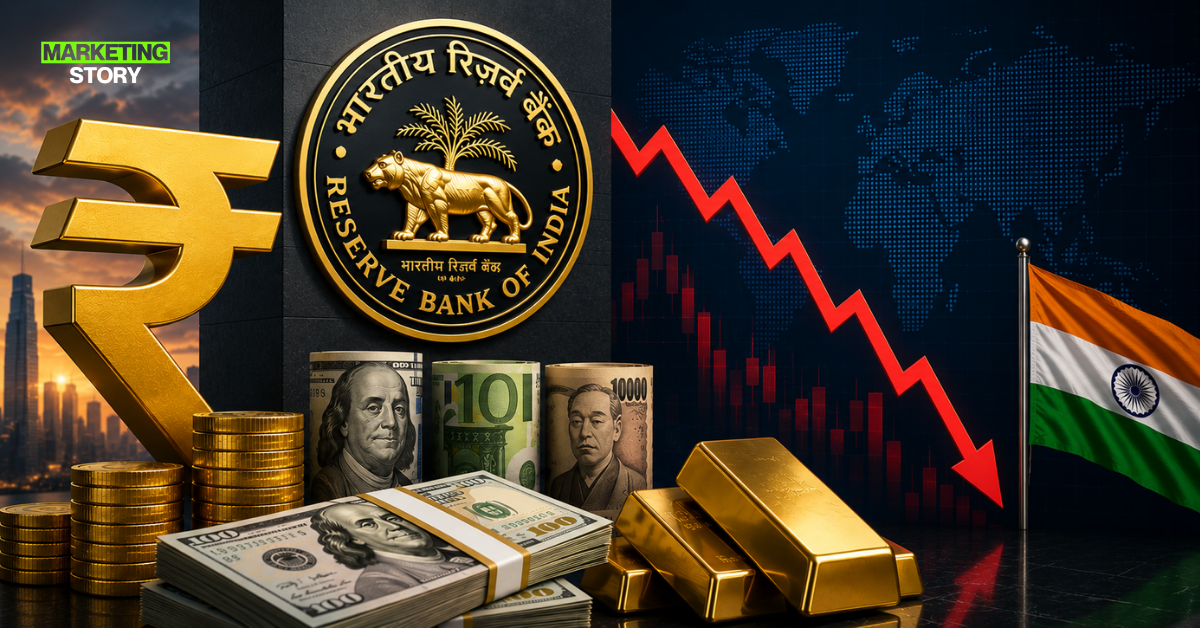
Gold Reserve Decline Weighs on India’s Forex Buffer
India’s foreign exchange reserves declined by $5.654 billion to $666.933 billion during the week ended June 26, according to the latest data released by the Reserve Bank of India (RBI). The decline follows a gain of $963 million in the previous reporting week, reflecting continued fluctuations in the country’s external reserves amid changing global financial conditions.
Although the reserves remain among the world’s largest, the latest fall was primarily driven by a sharp decline in the value of gold holdings. India’s forex reserves continue to play a crucial role in supporting the rupee, financing imports, and maintaining investor confidence during periods of global uncertainty.
Gold Holdings Lead the Weekly Decline
The biggest contributor to the fall in reserves was the country’s gold reserves, which declined by $5.394 billion to $102.536 billion during the reporting week. Gold forms a significant component of India’s foreign exchange reserves, and its valuation is influenced by fluctuations in international gold prices and currency movements.
Meanwhile, foreign currency assets (FCAs) the largest component of India’s forex reserves declined by a relatively modest $150 million to $541.067 billion. FCAs comprise assets denominated in major global currencies such as the US dollar, euro, pound sterling, and Japanese yen, with their value changing based on exchange rate movements.
The latest figures indicate that the sharp drop in overall reserves was largely valuation-driven rather than caused by significant intervention in the foreign exchange market.
Other Reserve Components Also Declined
Apart from gold and foreign currency assets, other components of India’s forex reserves also witnessed a marginal decline.
The country’s Special Drawing Rights (SDRs) with the International Monetary Fund (IMF) fell by $89 million to $18.558 billion. India’s reserve position with the IMF also declined by $21 million, ending the week at $4.772 billion.
Although these components represent a relatively small portion of the total reserve pool, they contribute to the country’s overall external financial strength and international liquidity position.
Forex Reserves Remain Well Above Historical Levels
Despite the latest decline, India’s foreign exchange reserves remain substantially higher than historical averages. Earlier this year, the reserves had touched an all-time high of $728.494 billion during the week ended February 27.
However, the onset of geopolitical tensions in West Asia placed pressure on global financial markets and the Indian rupee. During this period, the RBI reportedly intervened in the foreign exchange market by selling US dollars to manage excessive volatility in the domestic currency, contributing to fluctuations in the reserve position over subsequent weeks.
The central bank continues to maintain a strong reserve buffer to ensure financial stability, support the rupee during external shocks, and provide confidence to global investors.
Why India’s Forex Reserves Matter
Foreign exchange reserves are one of the most important indicators of a country’s external financial strength. They help finance imports, service external debt, stabilise the domestic currency, and provide a cushion during periods of global economic uncertainty or capital outflows.
A healthy reserve position also enhances investor confidence and strengthens India’s ability to respond to external market disruptions. While weekly reserve movements are influenced by valuation changes, capital flows, and central bank operations, economists generally assess the long-term trend rather than individual weekly fluctuations.
With reserves still comfortably above $660 billion, India continues to maintain one of the strongest external positions among emerging economies, providing policymakers with significant flexibility to manage future global economic and geopolitical challenges.