
Can India’s Economy Sustain Growth Amid Geopolitical Tensions and Weather Uncertainty?
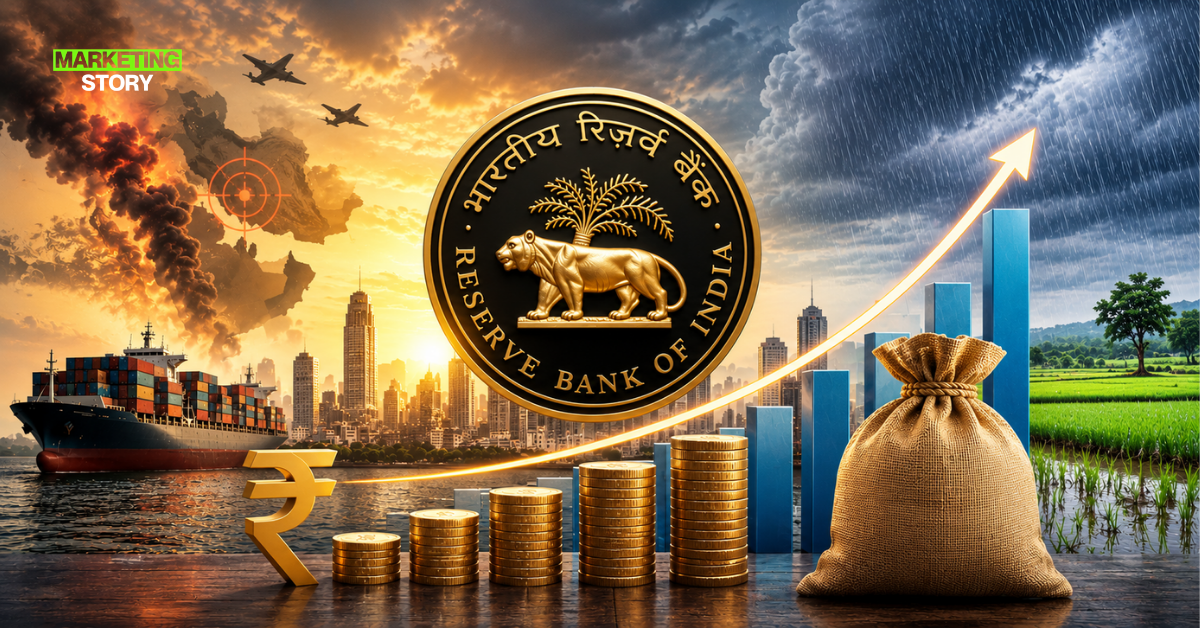
The Reserve Bank of India (RBI) has reaffirmed confidence in the country’s economic resilience despite growing concerns over the ongoing conflict in West Asia and the uneven progress of the southwest monsoon. In its latest State of the Economy Report for July, the central bank said India’s domestic economy continues to remain on a stable growth path, supported by strong demand, healthy industrial activity, and a resilient services sector.
However, the RBI also cautioned that rising geopolitical tensions involving Iran, along with concerns over deficient rainfall in parts of the country, could create fresh risks for inflation and economic growth in the coming months.
The report comes ahead of the RBI’s next monetary policy meeting scheduled for August 5, where the central bank is widely expected to keep interest rates unchanged.
Domestic Demand Continues to Support Growth
According to the RBI, India’s economy has successfully navigated global uncertainties over the past few months, thanks to strong domestic fundamentals.
The report noted that healthy consumer demand, continued industrial production, and sustained growth in the services sector have helped the economy remain resilient despite external challenges.
High-frequency economic indicators, which include manufacturing activity, electricity demand, GST collections, and services performance, continue to point towards stable economic momentum. These indicators suggest that business activity remains healthy across several sectors, providing confidence that India’s growth story remains intact.
The RBI believes these strong domestic drivers will continue to cushion the economy from external shocks, including geopolitical tensions and global market volatility.
West Asia Conflict Could Push Up Inflation
While maintaining an optimistic outlook, the central bank warned that the ongoing conflict involving Iran remains a significant risk for India’s economy.
India imports more than 85% of its crude oil requirements, making it highly vulnerable to fluctuations in global oil prices. Any prolonged disruption in oil supplies or a sharp increase in crude prices could raise transportation, logistics, manufacturing, and energy costs across the economy.
Higher crude prices would also increase imported inflation, making it more difficult for the RBI to maintain price stability.
The report highlighted that geopolitical developments will remain an important factor influencing inflation and overall economic conditions over the coming months.
Monsoon Remains Critical for Rural Economy
Another major concern highlighted by the RBI is the progress of the southwest monsoon, which contributes nearly 70% of India’s annual rainfall.
The monsoon plays a crucial role in supporting India’s $300 billion agriculture sector, influencing crop production, rural incomes, food prices, and overall economic activity.
According to the report, the current monsoon has been uneven, leading to delays in the sowing of some important crops.
A weak or deficient monsoon could reduce agricultural output, impact rural consumption, and push up food inflation.
However, the RBI noted that comfortable foodgrain stocks maintained by the government are expected to help cushion any immediate inflationary pressures arising from lower crop production.
RBI Likely to Hold Interest Rates Steady
The central bank is expected to keep the repo rate unchanged at 5.25% during its upcoming Monetary Policy Committee (MPC) meeting on August 5.
RBI Governor Sanjay Malhotra has indicated that the current policy stance is likely to continue unless inflationary pressures become broader and more persistent.
Unlike several global central banks that have adjusted monetary policy in response to geopolitical developments, the RBI appears comfortable maintaining its current approach while closely monitoring inflation, crude oil prices, and domestic demand.
Growth Outlook Remains Positive
Despite the challenges posed by global uncertainty and weather-related risks, the RBI continues to project India’s GDP growth at 6.6% for the current financial year.
The central bank also expects average inflation to remain at 5.1%, although it acknowledged that rising crude oil prices and an uneven monsoon could put upward pressure on consumer prices.
The report emphasised that India’s strong macroeconomic fundamentals, healthy demand conditions, resilient industrial production, and expanding services sector provide a solid foundation for sustained economic growth.
What Lies Ahead?
The RBI’s latest assessment reinforces the view that India remains one of the world’s fastest-growing major economies despite an increasingly uncertain global environment.
While risks from geopolitical tensions in West Asia and weather-related disruptions cannot be ignored, the central bank believes the economy is well-positioned to absorb external shocks. Going forward, policymakers will closely monitor crude oil prices, monsoon progress, food inflation, and global developments before making any significant changes to monetary policy.
If domestic demand remains strong and inflation stays within manageable levels, India is expected to maintain its growth momentum through FY27 while continuing its path toward long-term economic expansion.