
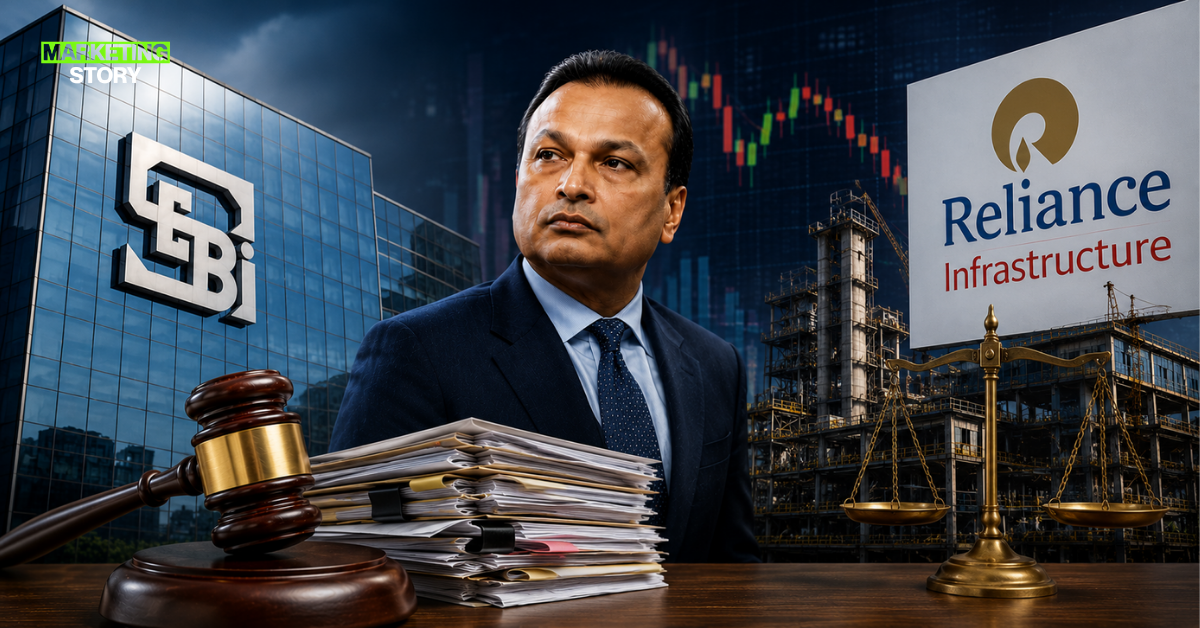
Why Did SEBI Reject Anil Ambani’s Settlement Request?
India’s capital markets regulator, the Securities and Exchange Board of India (SEBI), has rejected settlement applications filed by industrialist Anil Ambani and companies within his corporate group over allegations related to the alleged misuse of company funds at Reliance Infrastructure. The regulator’s decision marks another significant development in the ongoing regulatory scrutiny surrounding the Reliance ADA Group and raises fresh questions about corporate governance, investor confidence, and fundraising plans.
According to documents reviewed by Reuters, SEBI rejected the applications after alleging that Reliance Infrastructure improperly routed ₹6,526 crore through transactions involving entities allegedly linked to controlling shareholder Anil Ambani. The regulator believes the transactions may have amounted to a misuse of company funds instead of serving the interests of public shareholders. The allegations remain under investigation and have not been proven in court.
What Are the Allegations Against Reliance Infrastructure and Anil Ambani?
SEBI first outlined its concerns in September, alleging that company funds were diverted through financial arrangements that ultimately benefited entities connected to the Reliance ADA Group. According to the regulator, the transactions could represent personal enrichment rather than legitimate corporate activity.
The investigation goes beyond the initially disclosed financial exposure of ₹6,526 crore. SEBI has reportedly alleged that Reliance Infrastructure diverted nearly ₹17,670 crore to engineering contractor CLE Private Ltd over a decade through 2024. The regulator further claimed that the contractor subsequently invested at least ₹11,200 crore into companies associated with the Reliance ADA Group.
SEBI also alleged that although CLE Private Ltd was presented as an independent company, it effectively functioned as a Reliance ADA Group entity under the indirect control of Anil Ambani and certain group officials. These findings form a key part of the regulator’s case.
How Has the Anil Ambani Group Responded?
The Anil Ambani Group has strongly denied all allegations. In a statement, the group’s spokesperson said the allegations are “categorically denied” and emphasised that the matters are currently sub judice. The group stated it will continue defending its position through the legal process based on professional legal advice.
SEBI has not publicly commented on the rejection beyond the regulatory proceedings. Since the matter remains under judicial consideration, the allegations have yet to be tested through the complete legal process.
Why Is This Decision Important for Investors?
SEBI’s rejection carries significant implications because settlement proceedings allow companies to resolve regulatory cases by paying penalties without admitting wrongdoing. Once a settlement request is rejected, the regulator typically proceeds with a detailed adjudication process that may result in monetary penalties, market restrictions, or other regulatory actions if violations are established.
For Reliance Infrastructure, the timing is particularly important as the company has already received board approval to raise up to ₹3,000 crore from public markets. Ongoing regulatory proceedings could influence investor sentiment, due diligence, and fundraising efforts until greater clarity emerges.
The rejection also signals SEBI’s increasingly stringent approach towards cases involving corporate governance, related-party transactions, and protection of minority shareholders.
What Does This Mean for India’s Corporate Governance Landscape?
The case reflects the growing emphasis Indian regulators are placing on transparency, disclosure standards, and accountability in listed companies. Regulators have intensified scrutiny of complex fund movements involving connected entities, particularly where questions arise over whether transactions primarily benefit promoters instead of shareholders.
By rejecting settlement requests in cases involving serious allegations, SEBI appears to be reinforcing its commitment to stronger market oversight. For listed companies, the development serves as a reminder that governance practices, disclosure obligations, and financial controls remain under close regulatory examination.
What Happens Next in the Investigation?
Following the rejection of the settlement applications, SEBI is expected to continue its adjudication process. If the regulator ultimately issues a final order, it could include financial penalties, market access restrictions, or other enforcement actions depending on its findings. The affected companies and individuals would have the right to challenge any adverse order before the appropriate judicial forum.
For now, the case remains ongoing, with both regulators and the Anil Ambani Group expected to present their respective positions through the legal process. Until a final decision is reached, the allegations remain contested, and the outcome could have important implications for Reliance Infrastructure, its shareholders, and India’s broader corporate governance framework.