
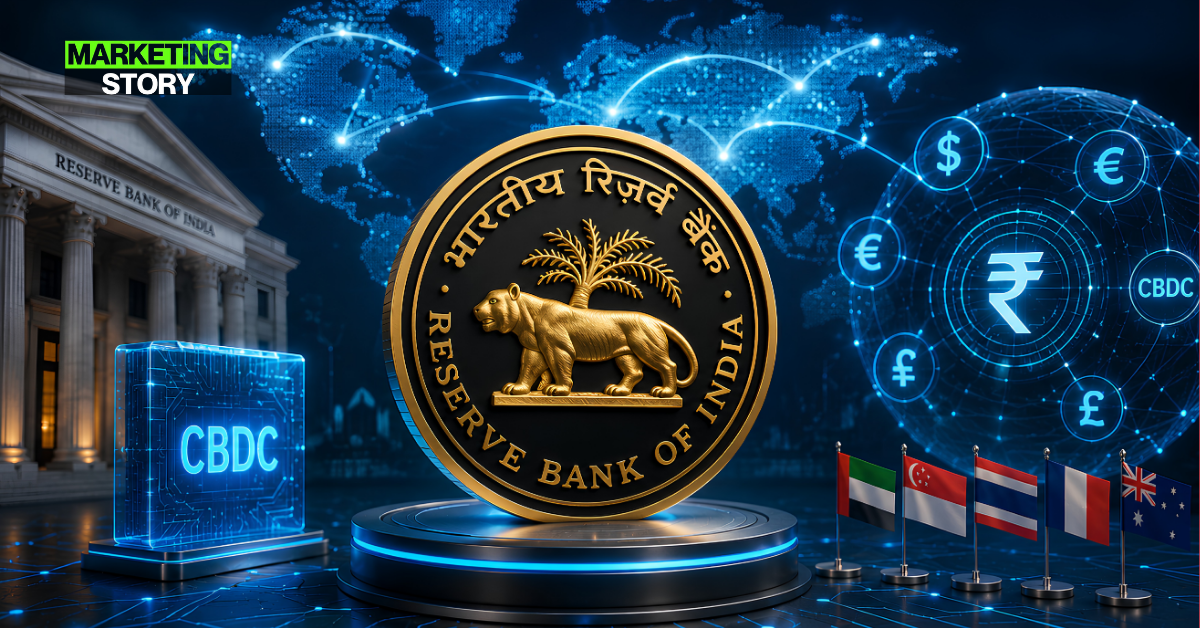
Is RBI Preparing For Global CBDC Transactions?
The Reserve Bank of India plans to expand its central bank digital currency (CBDC) initiatives by launching bilateral and multilateral cross-border pilot projects during FY27.
According to the RBI’s 2025-26 annual report, the central bank will explore cross-border CBDC transactions through selected use cases while participating in international projects focused on governance frameworks and technical standards.
The move signals RBI’s intention to strengthen India’s position in the evolving global digital payments ecosystem.
Which Countries Is RBI Working With?
The central bank has been actively engaging with several overseas regulators and monetary authorities.
Earlier this year, reports indicated that RBI was in discussions with central banks from multiple Asian and European countries to build infrastructure supporting both wholesale and retail cross-border CBDC transactions.
The RBI has also signed a memorandum of understanding with the Monetary Authority of Singapore and held discussions with the Central Bank of the UAE regarding operationalising cross-border digital currency pilots.
Industry observers believe such collaborations could help reduce settlement costs, improve payment efficiency and shorten transaction times for international transfers.
How Will RBI Expand Domestic CBDC Pilots?
Beyond international use cases, RBI plans to broaden domestic CBDC experiments during FY27.
The central bank intends to test additional applications involving government welfare schemes, direct benefit transfers (DBTs) and commercial business transactions.
A new framework under the CBDC and Asset Tokenisation Sandbox is also expected to be introduced, enabling companies and institutions to develop and test products built around digital currency infrastructure.
According to the RBI, retail CBDC pilots have progressed broadly in line with expectations, with ongoing work focused on programmability, government schemes, specialised banking products and cross-border payments.
How Is RBI Using Programmable CBDC?
One of the key innovations being tested is programmable digital currency.
During FY26, RBI expanded pilot programmes where beneficiaries received welfare payments through programmable CBDC wallets.
In regions including Gujarat, Puducherry and Chandigarh, public distribution system beneficiaries received food subsidies through programmable CBDC tokens that could only be used for approved purchases at designated merchants and fair-price shops.
Industry experts view programmable money as one of the most promising applications of digital currencies because it enables targeted and controlled fund usage.
What Is RBI Doing In Asset Tokenisation?
The central bank is also accelerating efforts in asset tokenisation.
RBI has developed the Unified Markets Interface (UMI), a platform designed to facilitate tokenisation of financial assets while using wholesale CBDC for settlement.
A pilot involving tokenised certificates of deposit has already been initiated on the platform.
The central bank plans to conduct additional experiments involving tokenised assets and CBDC-based settlement systems as participation grows.
Why Are CBDCs Becoming Important Globally?
A CBDC is a digital form of sovereign currency issued directly by a central bank.
Unlike cryptocurrencies, CBDCs represent legal tender and appear as liabilities on a central bank’s balance sheet.
Many central banks worldwide are exploring CBDCs to modernise payment systems, improve financial inclusion, reduce transaction costs and strengthen cross-border payment infrastructure.
RBI has been among the early major central banks to launch live pilots, beginning its wholesale CBDC trial in November 2022 and retail pilot in December 2022.
What Does This Mean For India’s Digital Payments Future?
The planned expansion of cross-border CBDC pilots highlights RBI’s broader vision of integrating digital currency into domestic and international financial systems.
Analysts believe successful implementation could improve remittances, streamline trade settlements and create new opportunities for tokenised financial markets.
As digital currencies move from experimentation toward practical deployment, RBI appears focused on balancing innovation with regulatory oversight while gradually building the infrastructure needed for a future digital economy.