
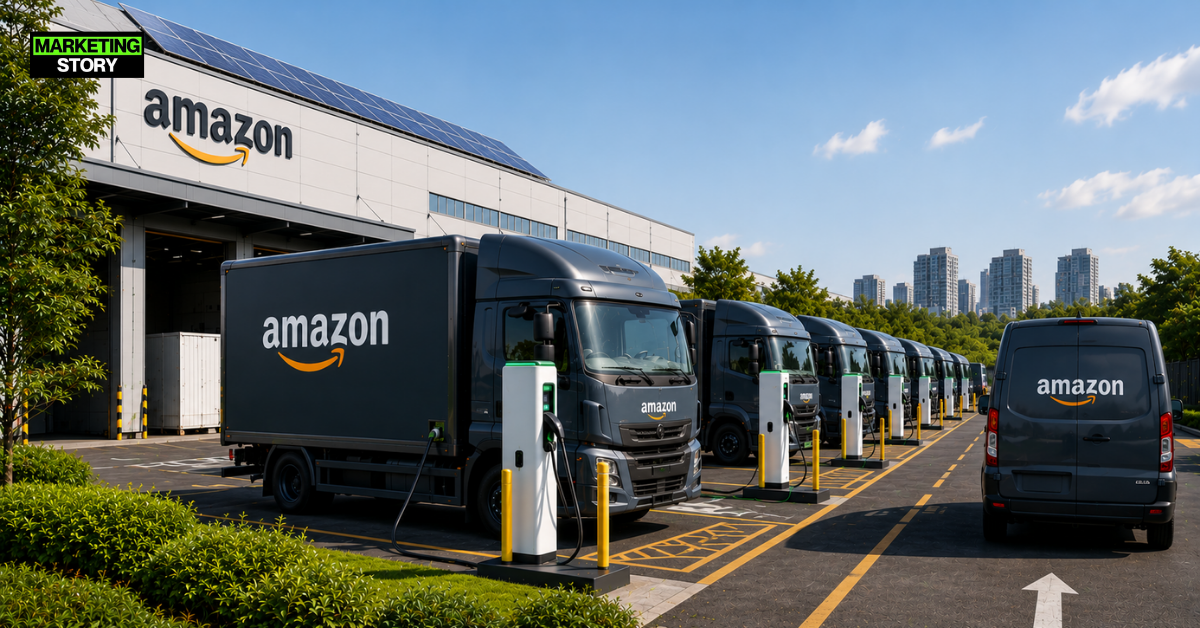
E-Commerce Giant Plans To Add 1,000 Electric Trucks Over The Next Five Years
Amazon is doubling down on electric mobility in India, with the company relying largely on its own charging infrastructure to support a rapidly expanding fleet of electric delivery vehicles.
The e-commerce giant already operates more than 10,000 electric vehicles across India and plans to introduce over 1,000 electric trucks into its logistics network over the next five years. The move forms part of Amazon’s broader strategy to make package deliveries more sustainable while reducing carbon emissions across its supply chain.
As India pushes for faster EV adoption, charging infrastructure remains one of the biggest challenges facing fleet operators. However, Amazon believes its existing model of on-site charging can help overcome some of those hurdles.
Amazon Depends Largely On On-Site Charging
Speaking about EV infrastructure challenges, Andreas Marschner, Amazon’s Vice President of Global Engineering and Sustainability, said the issue is not unique to India and is being faced across several international markets.
According to Marschner, challenges around power availability, grid capacity, and charging infrastructure continue to affect electric mobility adoption globally.
To address this, Amazon has focused heavily on installing charging facilities at its own delivery stations and logistics hubs.
“What we have been indexing high so far is mostly on-site charging. It’s also the same in India, meaning that we have the ability to charge the vehicles at the delivery stations at the point where deliveries start happening,” Marschner said.
This approach allows Amazon to keep its EV fleet operational without depending entirely on public charging networks, which remain limited in many parts of the country.
Public Infrastructure Still Important
While Amazon’s private charging network currently supports most of its EV operations, the company acknowledges that wider public charging infrastructure would significantly accelerate adoption.
Marschner noted that greater charging availability and stronger grid capacity would improve operational efficiency and make electric transportation more practical at scale.
To help address these challenges, Amazon is collaborating with multiple partners across the transportation and energy ecosystem.
The company believes that large scale EV adoption will require cooperation between businesses, infrastructure providers, automakers, and government agencies.
“We need to work with other partners to see what is the path going forward. We are willing and always interested to scale when it is possible, both from an infrastructure setup and from an overall cost perspective,” Marschner added.
Electric Trucks Become A Bigger Focus
Amazon’s EV strategy is now extending beyond last-mile deliveries.
The company has already started using smaller electric trucks for local distribution operations and recently announced a partnership with commercial vehicle manufacturer Eicher to deploy 1,000 electric trucks in India.
The addition of heavy-duty electric vehicles is expected to help Amazon reduce emissions from inter-city and regional transportation while supporting its long-term sustainability commitments.
Electric freight vehicles are increasingly becoming a key focus area for logistics companies as they seek cleaner alternatives to diesel-powered transportation.
Exploring Greener Rail Transportation
Beyond road transport, Amazon is also exploring ways to make freight movement more sustainable through railways.
The company is working closely with Indian Railways to identify opportunities for greener cargo transportation, which could further reduce the carbon footprint of its logistics operations.
Rail-based freight solutions are generally considered more energy-efficient than long-distance road transportation and could play an important role in Amazon’s sustainability roadmap.
Sustainability Remains A Key Priority
Amazon has been accelerating the deployment of electric vehicles globally as part of its commitment to reducing operational emissions and achieving long-term climate goals.
In India, the combination of a growing EV fleet, dedicated charging infrastructure, electric truck deployments, and greener freight initiatives reflects the company’s effort to build a more sustainable logistics ecosystem.
As EV technology improves and charging networks expand, Amazon is expected to further increase its investment in clean transportation solutions across the country.