
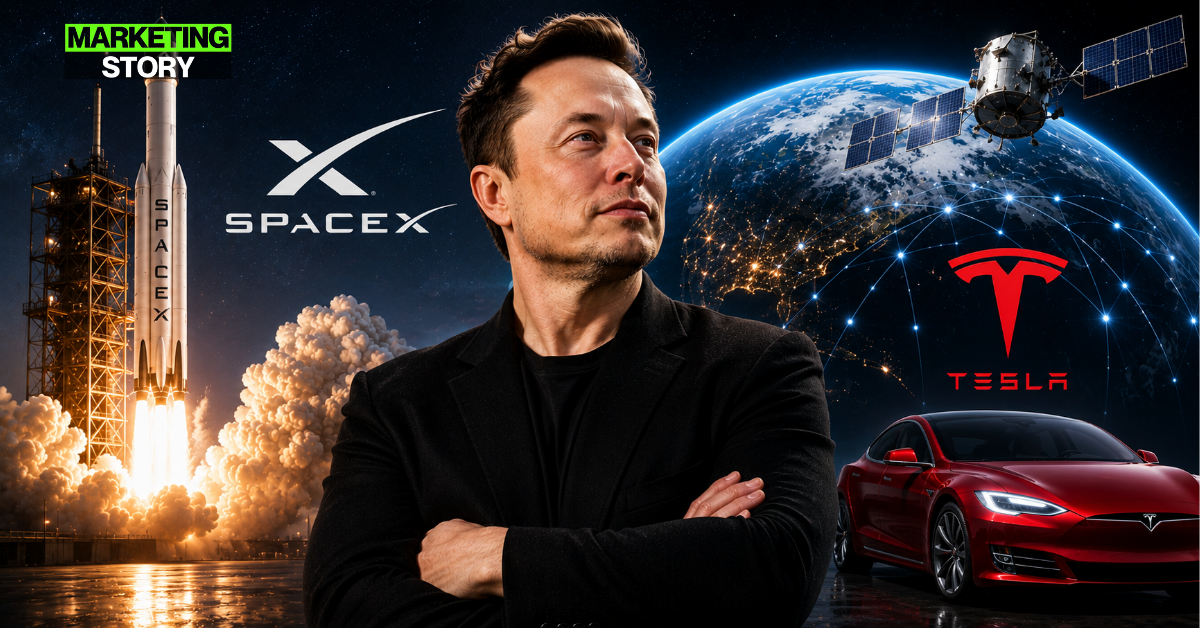
SpaceX Listing Pushes Musk’s Net Worth Beyond $1.1 Trillion
Elon Musk has become the world’s first trillionaire after SpaceX’s blockbuster public listing added hundreds of billions of dollars to his fortune, cementing his position as the wealthiest person in modern history.
The milestone follows SpaceX’s record-breaking $75 billion initial public offering (IPO), one of the largest public listings ever. The offering underscored investor confidence in Musk’s sprawling business empire, which spans electric vehicles, space exploration, satellite communications, artificial intelligence, social media, and emerging technologies.
Prior to the IPO, Forbes estimated Musk’s net worth at approximately $780 billion. Following the listing, his wealth is projected to exceed $1.1 trillion, according to calculations based on company filings and market valuations.
The achievement places Musk in a league of his own. For comparison, the world’s second-richest individuals have largely remained in the $300 billion range, highlighting the extraordinary scale of his fortune.
SpaceX Emerges As The Biggest Driver Of Musk’s Wealth
The majority of Musk’s wealth is now tied to SpaceX, where his stake is estimated to be worth around $866 billion.
Founded in 2002, SpaceX has evolved from a private rocket startup into one of the world’s most valuable technology and aerospace companies. The company operates launch services, satellite internet network Starlink, defense contracts, and ambitious projects aimed at enabling human settlement beyond Earth.
The IPO marks a significant milestone not only for SpaceX but also for the broader commercial space industry, which has attracted increasing investor attention in recent years.
Combined with his holdings in Tesla and several other ventures, SpaceX has become the cornerstone of what analysts increasingly describe as the “Muskonomy” a network of interconnected businesses built around Musk’s vision and leadership.
From South Africa To The World’s Richest Person
Born in Pretoria, South Africa, in 1971, Musk later moved to North America and graduated from the University of Pennsylvania in 1997.
His entrepreneurial journey began with internet startups before he became involved with online payments company PayPal, which was eventually acquired by eBay.
However, it was Tesla and SpaceX that transformed him into one of the most influential business leaders of the 21st century.
After taking over as Tesla’s CEO in 2008, Musk helped accelerate the global shift toward electric vehicles. Tesla’s success forced traditional automakers to invest heavily in EV technology and changed perceptions about the viability of electric transportation.
Industry veteran Bob Lutz, former Vice Chairman of General Motors, has credited Musk with restoring global respect for American automotive innovation.
The “Elon Premium” Phenomenon
Financial analysts increasingly argue that Musk’s companies command valuations that go beyond traditional financial metrics.
Investors often place a premium on Musk’s ability to execute ambitious projects and disrupt established industries.
This phenomenon has become known as the “Elon premium” a valuation boost driven by investor confidence in Musk’s vision rather than conventional earnings-based assessments.
Matt Kennedy, Senior Strategist at Renaissance Capital, noted that SpaceX’s valuation reflects a belief in Musk’s long-term ambitions as much as the company’s current financial performance.
Many investors are effectively betting that Musk can replicate Tesla’s success in industries such as space exploration, artificial intelligence, satellite communications, autonomous systems, and advanced infrastructure.
A Polarizing Figure In Business And Politics
While Musk remains one of the world’s most admired entrepreneurs, he is also among its most controversial.
His acquisition of Twitter, later rebranded as X, for $44 billion in 2022 dramatically expanded his influence beyond technology and business. The platform provided him with a direct channel to hundreds of millions of users and amplified his voice on topics ranging from free speech and immigration to government spending and geopolitics.
His political involvement has also generated intense debate. Musk’s advisory role in the administration of US President Donald Trump and his increasingly outspoken political views have attracted both praise and criticism.
Some investors and governance experts have raised concerns about the concentration of influence around a single entrepreneur and the potential risks of linking corporate fortunes too closely to an individual.
Tesla has also faced legal challenges and shareholder disputes, including controversies surrounding Musk’s compensation packages and governance practices.
Why Investors Continue To Back Musk
Despite recurring controversies, investor confidence in Musk remains remarkably strong.
Supporters point to his track record of transforming industries that many believed were impossible to disrupt. From electric vehicles and reusable rockets to satellite internet and artificial intelligence, Musk has repeatedly demonstrated an ability to turn ambitious ideas into commercially successful businesses.
Even former critics have softened their stance over time.
JPMorgan Chase CEO Jamie Dimon, who once battled Musk in court, recently praised the entrepreneur, calling him one of the most innovative figures of the modern era.
For investors, the trillion-dollar milestone reflects more than personal wealth. It represents the market’s belief that Musk’s companies could continue shaping the future of transportation, energy, communications, artificial intelligence, and space exploration for decades to come.
What Comes Next?
With SpaceX now publicly traded and Tesla remaining one of the world’s most valuable companies, Musk’s fortune could continue to fluctuate significantly with market movements.
However, becoming the world’s first trillionaire marks a historic milestone in global business history.
Whether viewed as a visionary innovator or a controversial billionaire, Elon Musk has achieved something no entrepreneur has accomplished before: building a personal fortune exceeding $1 trillion while simultaneously reshaping multiple industries across the global economy.