
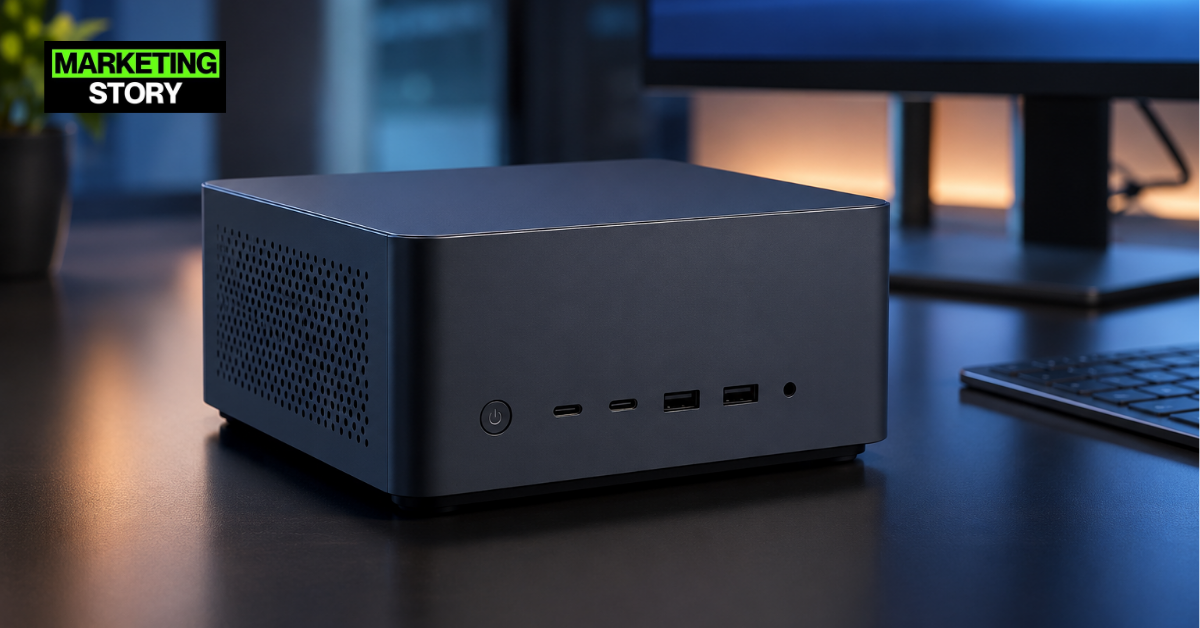
Qualcomm Technologies and Asus have taken their AI PC ambitions beyond laptops with the launch of the Asus Ascent QN10, the first mini-PC powered by Qualcomm’s Snapdragon X2 Elite platform. Unveiled at Computex 2026, the compact desktop marks a significant step in Qualcomm’s effort to expand its Arm-based computing ecosystem into new form factors. Designed for AI-driven workloads, software development, and enterprise productivity, the device combines desktop-class performance with a highly compact footprint.
Why Is the Asus Ascent QN10 a Significant Launch?
The Ascent QN10 is the first mini-PC built around the Snapdragon X2 Elite processor, bringing Qualcomm’s latest AI-focused computing platform to desktop environments. Until now, Snapdragon X2 Elite chips were primarily found in Copilot+ laptops. With this launch, Qualcomm is extending its Windows-on-Arm strategy to compact desktops, targeting developers, businesses, and AI professionals looking for efficient local computing power.
What Hardware Powers the New Mini-PC?
At the heart of the Ascent QN10 is Qualcomm’s Snapdragon X2 Elite platform featuring up to 18 Oryon CPU cores, integrated Adreno graphics, and a dedicated Neural Processing Unit (NPU) capable of delivering 80 TOPS (trillion operations per second) of AI performance. The system is designed to run AI assistants, coding tools, and local AI models directly on the device without relying heavily on cloud infrastructure.
How Compact Is the Asus Ascent QN10?
One of the device’s standout features is its ultra-small design. Asus says the mini-PC occupies less than 0.7 liters of space, making it significantly smaller than traditional desktop systems. Despite its compact size, the machine is engineered for sustained performance while maintaining low power consumption and efficient thermal management.
What Role Does AI Play in This Device?
Artificial intelligence is central to the Ascent QN10’s positioning. The 80 TOPS NPU enables advanced on-device AI processing, supporting local AI agents, generative AI applications, coding assistants, and productivity tools. Asus and Qualcomm are positioning the device as a future-ready workstation capable of handling increasingly demanding AI workloads without requiring dedicated accelerator hardware.
What Does This Mean for Qualcomm’s Desktop Ambitions?
The launch signals Qualcomm’s growing confidence in the desktop computing market. Following the success of Snapdragon-powered Copilot+ PCs, the company is now challenging traditional x86-based desktop platforms from Intel and AMD. Industry observers view the Ascent QN10 as an important test case for Arm-powered desktop adoption, particularly among developers, enterprise users, and AI-focused professionals seeking performance, efficiency, and compact design in a single package.