
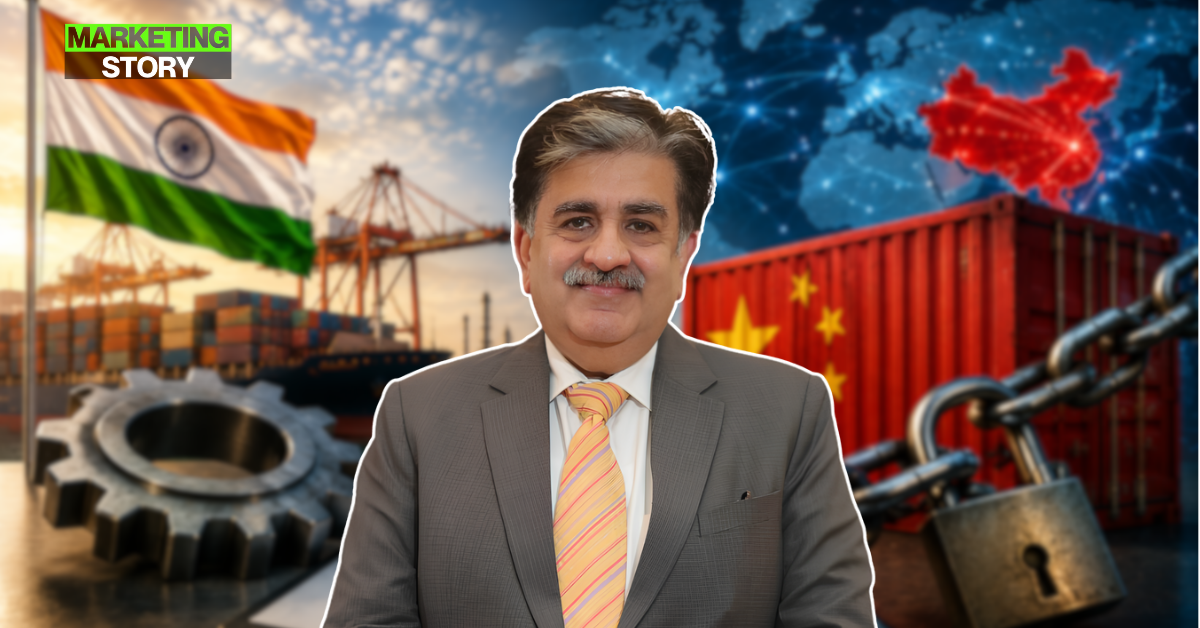
ICEA Seeks High-Level Government Intervention
The Indian Cellular and Electronics Association (ICEA) has urged the Indian government to establish a high-level inter-ministerial group to assess the potential impact of recent Chinese decrees that could disrupt global electronics supply chains and weaken India’s ‘China Plus One’ manufacturing strategy.
In a letter addressed to the Cabinet Secretary, ICEA Chairman Pankaj Mohindroo highlighted growing concerns within India’s electronics manufacturing ecosystem regarding new Chinese regulations that may affect global production networks, sourcing flexibility and technology supply chains.
The association represents several major mobile device and electronics companies operating in India and plays a key role in policy advocacy for the country’s rapidly expanding electronics manufacturing sector.
Concerns Over Two Chinese Decrees
The concerns stem from two recent Chinese regulations introduced earlier this year.
The first, titled “Regulations on the Security of Industrial and Supply Chains,” came into effect on April 7. The second, “Regulations on Countering Foreign Improper Extra Territorial Jurisdiction,” was passed on April 13.
Industry stakeholders believe these measures could potentially increase China’s control over supply chain dependencies and create additional operational uncertainty for multinational companies seeking to diversify manufacturing operations beyond China.
The regulations have triggered discussions within global electronics and technology industries as companies continue re-evaluating supply chain risks amid rising geopolitical tensions and trade uncertainties.
China Plus One Strategy Gains Importance
Over the last few years, India has emerged as one of the largest beneficiaries of the global “China Plus One” strategy, under which multinational corporations are gradually diversifying manufacturing operations away from China into alternative markets.
The strategy gained momentum following geopolitical tensions between the United States and China, supply chain disruptions during the pandemic and rising concerns around concentration risk in global manufacturing networks.
India has aggressively positioned itself as a preferred alternative manufacturing destination through production-linked incentive (PLI) schemes, infrastructure expansion and policy reforms targeting electronics, semiconductors and smartphone production.
Global companies including Apple and its manufacturing partners have significantly expanded production operations in India over the last few years.
Industry experts believe any disruption to global electronics supply chains could directly impact India’s ambitions of becoming a global manufacturing hub.
Industry Calls For Strategic Assessment
ICEA has reportedly recommended the creation of a coordinated inter-ministerial mechanism capable of evaluating the strategic, legal and economic implications of the new Chinese measures.
The association believes proactive policy assessment is necessary to ensure India’s supply chain resilience, investment attractiveness and long-term competitiveness in electronics manufacturing.
Analysts note that India’s electronics ecosystem remains partially dependent on Chinese imports for components, machinery and raw materials, making supply chain diversification a critical long-term objective.
At the same time, experts believe India must continue strengthening domestic component manufacturing capabilities, logistics infrastructure and semiconductor ecosystems to reduce external vulnerabilities.
Global Supply Chains Enter New Phase Of Geopolitical Realignment
The latest development reflects the broader transformation underway across global industrial supply chains as geopolitical considerations increasingly influence manufacturing decisions.
Countries around the world are reassessing dependencies in critical sectors including electronics, semiconductors, energy and advanced technologies.
For India, maintaining momentum in electronics manufacturing and attracting large-scale global investments will likely require faster policy execution, supply chain resilience and deeper integration into international production networks.
Industry observers believe the government’s response to emerging geopolitical supply chain risks could play a major role in determining India’s long-term success within the global electronics manufacturing landscape.