
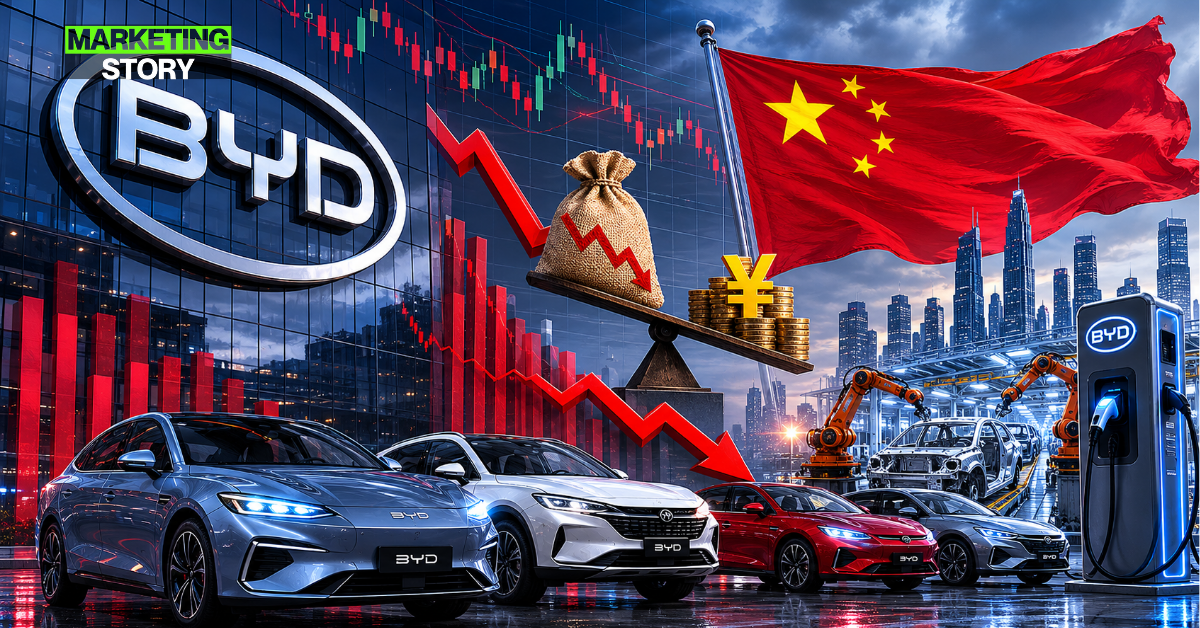
China’s EV Subsidy Rollback Begins Reshaping Market Dynamics
Chinese electric vehicle giant BYD has reported its first annual profit decline in four years, reflecting the growing strain emerging across China’s electric vehicle ecosystem following the rollback of state-backed subsidies.
The development marks a significant turning point for the global EV industry’s largest market, which for over a decade experienced explosive expansion fuelled by aggressive government incentives, tax exemptions and large scale industrial support.
As Beijing gradually withdraws policy driven stimulus, automakers are now entering a far more competitive and efficiency focused phase where pricing power, operational discipline and technological differentiation are becoming critical to survival.
Industry observers view BYD’s latest earnings as one of the clearest signals yet that China’s EV market is transitioning from subsidy-led hypergrowth to a more mature and intensely competitive environment.
Why China Pulled Back EV Subsidies
China officially ended full EV tax exemptions from January this year as policymakers attempted to steer the industry away from unsustainable “price-driven competition” toward a more innovation-led and value oriented growth model.
The earlier subsidy cycle had accelerated EV adoption at an unprecedented pace, helping China establish itself as the world’s dominant electric vehicle market. However, it also triggered severe overcapacity, encouraged aggressive discounting and led to the emergence of dozens of smaller manufacturers with limited long-term viability.
Authorities are now prioritising consolidation, technological advancement and sustainable industrial growth over artificial demand stimulation.
The subsidy rollback has already started impacting consumer purchasing behaviour. Without government incentives cushioning costs, automakers are increasingly being forced to either absorb pricing pressure internally or engage in deeper discounting to retain market share.
This has intensified the ongoing price war across China’s EV sector, significantly compressing margins across the industry.
BYD’s Earnings Come Under Pressure
BYD reported a nearly 20% decline in annual net profit to Rmb32.6 billion, missing analyst expectations and marking its weakest annual performance in four years.
The pressure became particularly visible during the final quarter, where profits reportedly fell 38% year-on-year amid slowing sales momentum and weakening pricing power.
Revenue growth also moderated sharply, rising just 3.5% despite continued expansion in China’s broader EV adoption.
Wang Chuanfu described the current market environment as a “brutal knockout stage,” underscoring the intensity of competition now defining China’s automotive sector.
The company’s core EV business has reportedly recorded declining sales volumes for six consecutive months, highlighting the growing difficulty of sustaining rapid growth in an increasingly saturated market.
Intensifying Competition Erodes BYD’s Dominance
China’s EV landscape has become substantially more competitive over the past year as domestic rivals accelerate investments in pricing, software integration and next-generation mobility technologies.
Companies including Geely, SAIC Motor, Huawei-backed ventures and Xiaomi have expanded aggressively through new product launches and integrated smart mobility ecosystems.
As a result, BYD’s share of China’s EV market has reportedly declined from nearly 27% a year ago to approximately 17% in early 2026.
The sharp decline reflects how rapidly competitive dynamics are evolving, even for established market leaders.
Overseas Expansion Emerges As A Strategic Priority
With domestic profitability under mounting pressure, BYD is increasingly turning toward international markets to sustain long-term growth.
The company’s overseas revenue reportedly increased by nearly 40%, supported by aggressive expansion across Europe, Southeast Asia and Latin America.
BYD is also investing heavily in global manufacturing facilities, logistics capabilities and shipping infrastructure as it attempts to strengthen export operations and reduce dependence on the Chinese market.
At the same time, financial pressure is beginning to intensify. Reports indicate the company’s operating cash inflows have weakened significantly while borrowing levels have increased amid continued investments in growth and infrastructure expansion.
While BYD maintains that its liquidity position remains healthy, analysts believe prolonged pricing pressure, rising leverage and slowing domestic demand could continue weighing on profitability if current market conditions persist.